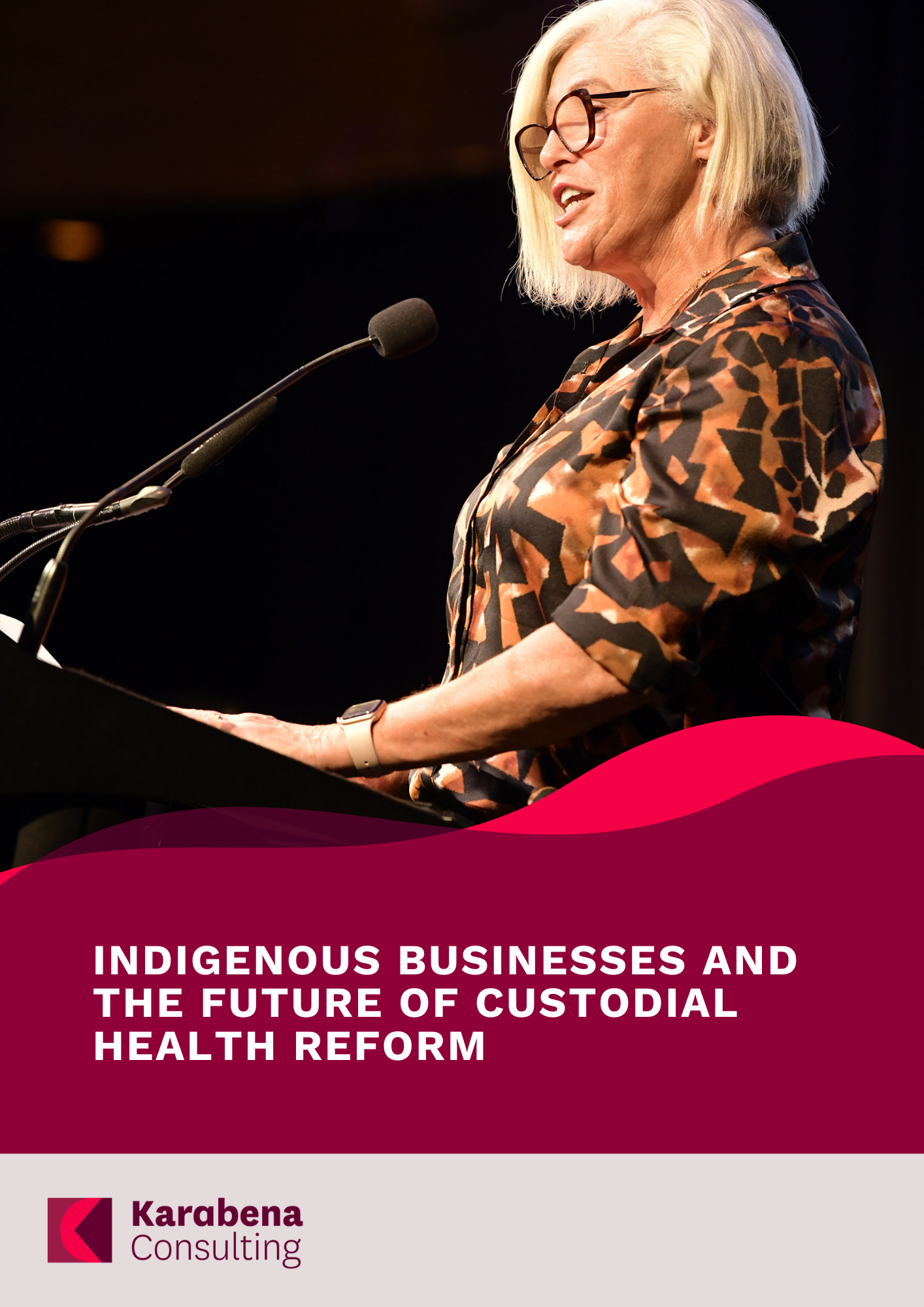
Indigenous businesses and the future of custodial health reform
Across this seven-part series, we’ve explored how Indigenous businesses can reshape custodial health in Victoria and beyond. From applying contagion theory, to co-designing a theory of change, to drafting policies and protocols, each post has shown the distinctive role Aboriginal-led enterprises bring to reform.
Read More
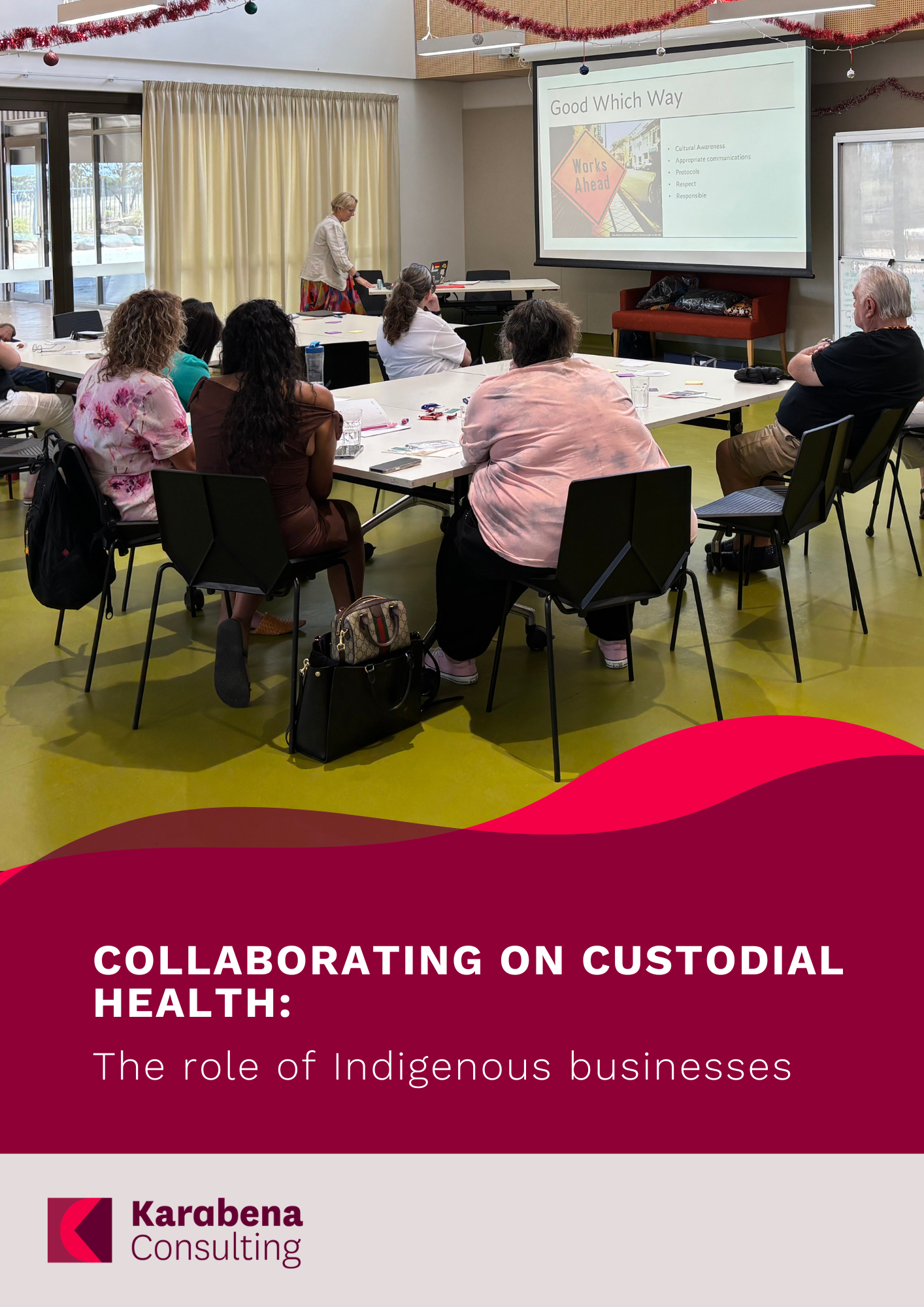
Collaborating on custodial health: The role of Indigenous businesses
Reform in custodial health needs more than good ideas. Even the strongest programs can collapse without policies and protocols to embed them in daily practice. Drafting these frameworks is often dismissed as a technical task, yet it is also where power is exercised. Whoever writes the policies sets the boundaries of what is possible.
Read More
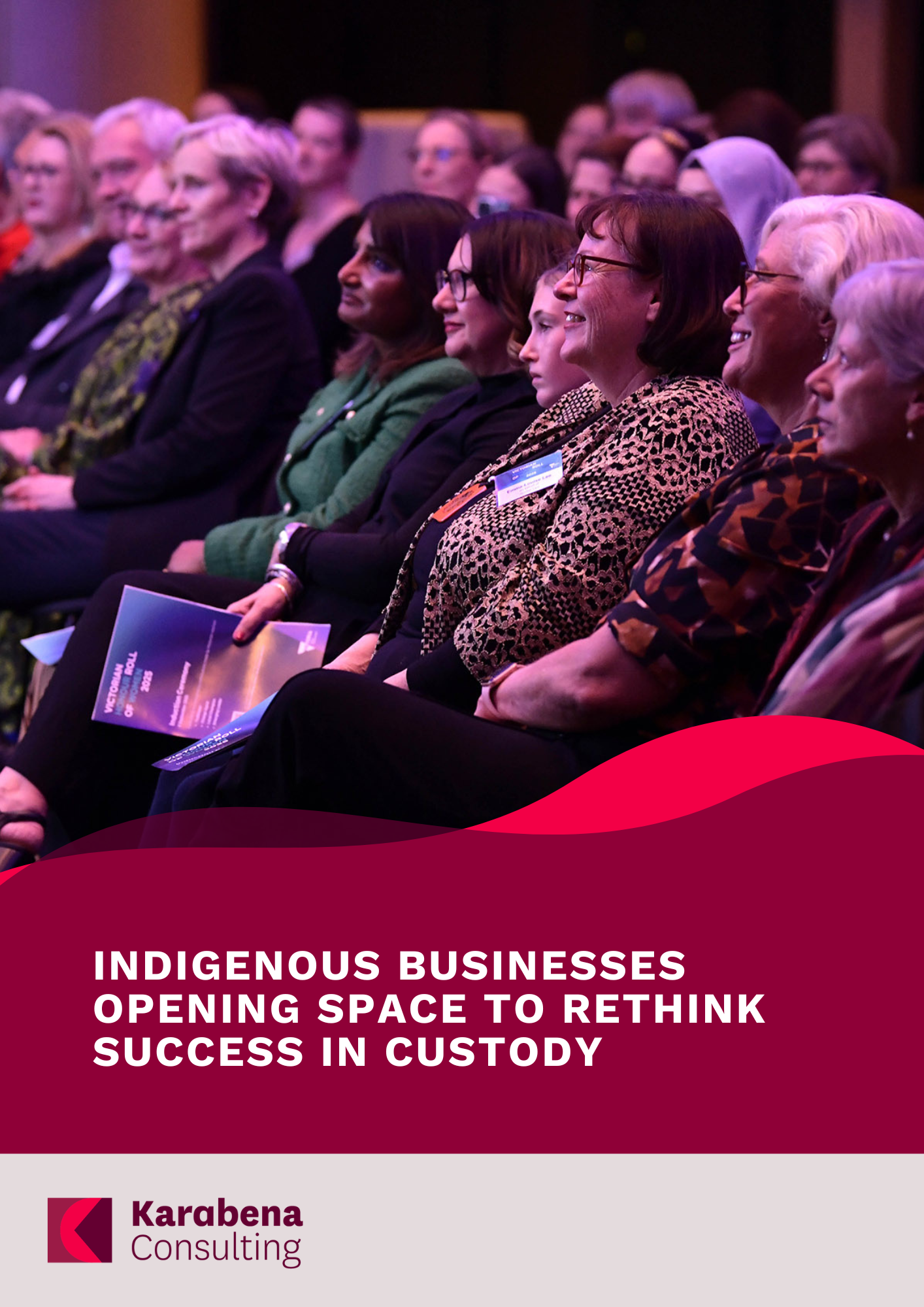
Indigenous businesses opening space to rethink success in custody
Custodial health reform is as much about deciding what counts as success, and how to measure it, as it is about designing programs. Counting incidents, disciplinary actions, or program completions gives only part of the story. It doesn’t show whether Aboriginal people in custody feel culturally safe, maintain family connection, or return to community with stronger chances of reintegration.
Read More
Innovation in custodial health: How Indigenous businesses boldly go where others can’t
Designing health care in prisons is never straightforward. Services have to meet the needs of individuals while dealing with the dynamics of the whole prison community. Mainstream providers tend to fall back on risk management and control, which leaves little room for new thinking. Indigenous businesses approach it differently. They bring cultural authority, lived experience, and holistic perspectives that open up space for new models of care.
Read More
Co-designing custodial health: Building a shared framework
Prisons are some of the most dehumanising environments we have. For Aboriginal and Torres Strait Islander people, time inside adds another layer to historical trauma, disconnection from Country, and systemic exclusion. Health services in custody have usually been about compliance, containment, or short-term treatment, not about social and emotional wellbeing.
Read More
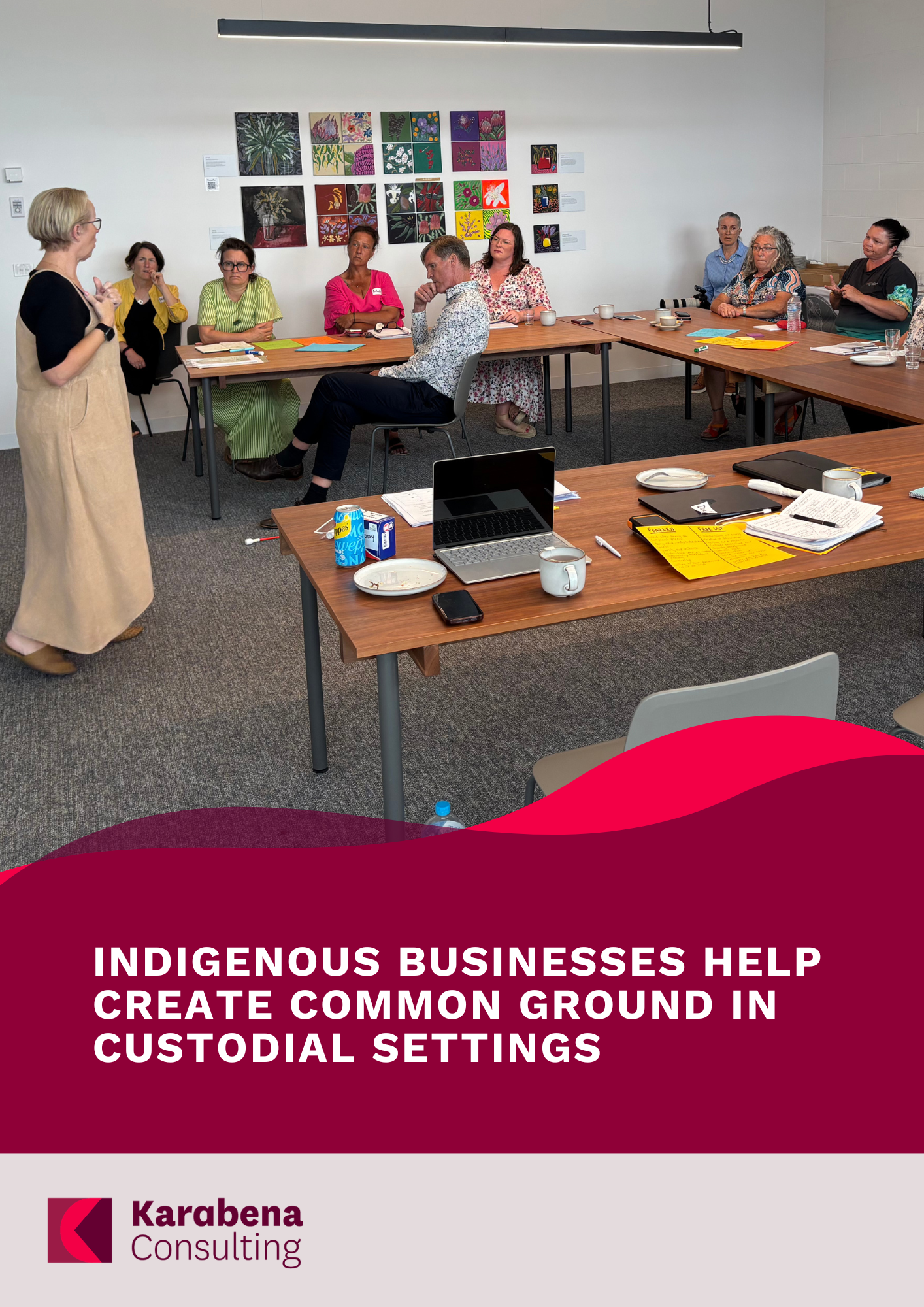
Using Indigenous businesses to create common ground in custodial settings
Prisons strip life back to routines and control. For Aboriginal people, that comes on top of disconnection from culture, family, and Country. In that kind of environment, reform doesn’t stick unless there’s a base of common ground to work from.
Indigenous businesses are in a unique spot to create that base. They carry cultural authority, they’re trusted in communities, and they can bridge the gap between institutions and Aboriginal voices.
Read More
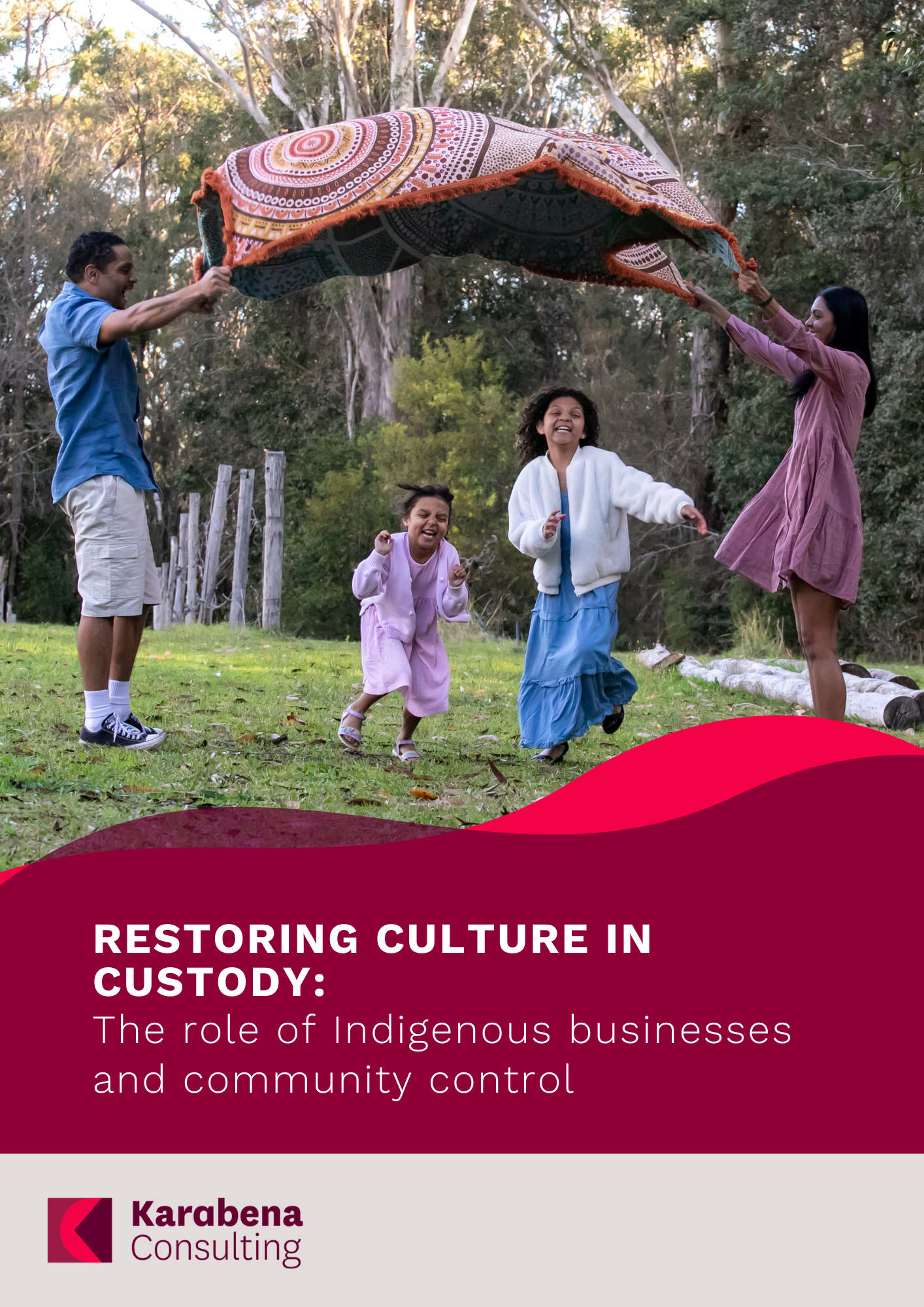
Restoring culture in custody: The role of Indigenous businesses and community control
Prisons operate as systems of control, imposing routines, schedules, and compliance that quickly strip away individuality and humanity. For Aboriginal and Torres Strait Islander people, incarceration not only reflects individual circumstances but also embodies the historical burden of systemic disadvantage spanning generations. The loss of cultural identity within these systems exacerbates this harm.
Read More
From concept to change: The role of Indigenous businesses in custodial health reform
Indigenous businesses design custodial health models that are culturally grounded and credible, embedding cultural authority that enables positive contagion and drives systemic reform.
Reforming custodial health means rethinking Aboriginal and Torres Strait Islander wellbeing in prisons. Indigenous businesses that work across health, justice and education, bring cultural authority and lived experience that mainstream providers cannot replicate.
Read More
Cultural humility: Not all knowledge is yours to hold
During a recent review of the Koori Maternity Services (KMS) Guidelines, I posed the question: “How do the KMS Guidelines align with broader maternity care standards?”
There was a pause. Then one KMS midwife responded, “What if we turn that around and ask: how do broader maternity standards align with Aboriginal ways of doing things?”
It was a quiet correction, but a sharp one. My question carried an unexamined assumption: that Western systems define the benchmark, and everything else is measured in relation to that. That moment made something clearer for me: if you assume your position is the default you’re performing authority, not practising cultural humility.
Read More
Investing in Impact: Why Karabena’s Work is Value for Money
At Karabena Consulting, we often hear: “Your prices are…high.”
Our answer is: yes, resoundingly so.
Our work delivers measurable social and economic return on investment (ROI). Not just in outputs, but in real, lasting change. We centre Aboriginal and Torres Strait Islander knowledge systems, drive policy reform, and build community capacity. This creates a ripple effect of impact that extends far beyond the life of a project.
Read More
Unlearning: The Hidden Work of Cultural Safety
We’ve all done it, clicked through a cultural awareness module on autopilot at double speed, skimmed a few facts, maybe even jumped straight to the quiz. Job done, right? You’re now culturally aware
Read More
Reframing Risk-Taking in Driving: A Strengths-Based Approach to Road Safety
Road safety is a critical issue for all communities, yet Aboriginal and Torres Strait Islander youth face unique systemic and intergenerational barriers that influence their approach to driving. Too often, risk-taking in driving is viewed as a deficit, rather than a natural developmental process that can be channelled into structured, positive pathways for skill development.
Read More